
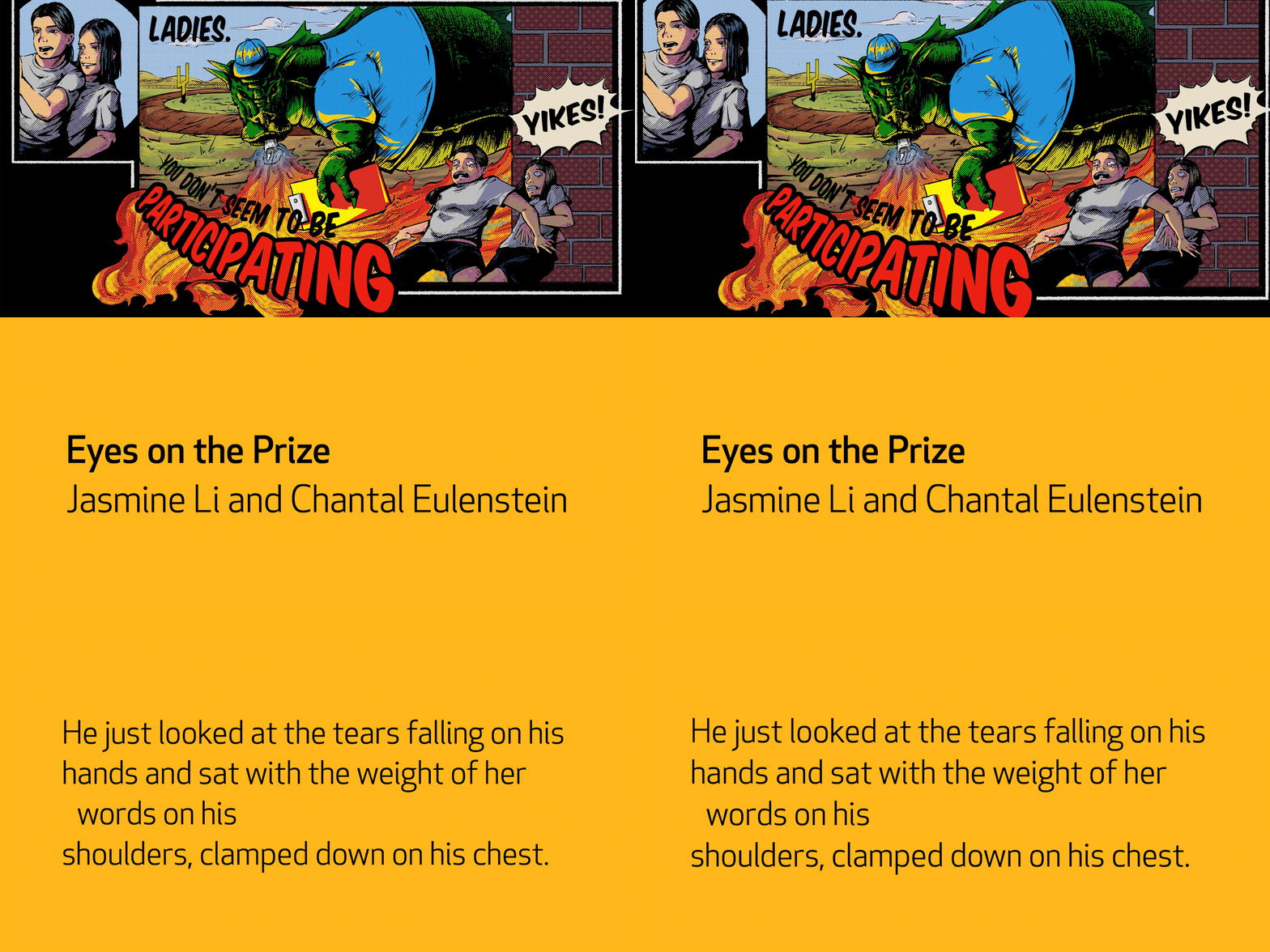
A Gold Medal Portfolio Award is the highest honor students can receive in the Scholastic Art & Writing Awards. Jurors choose portfolios by high school seniors whose works best represent the Scholastic Awards’ judging criteria: originality, skill, and the emergence of a personal vision or voice. These remarkable artists and writers will each receive a $12,500 scholarship.
Jasmine Li
Dav Pilkey Art Portfolio Award
Fremont, CA
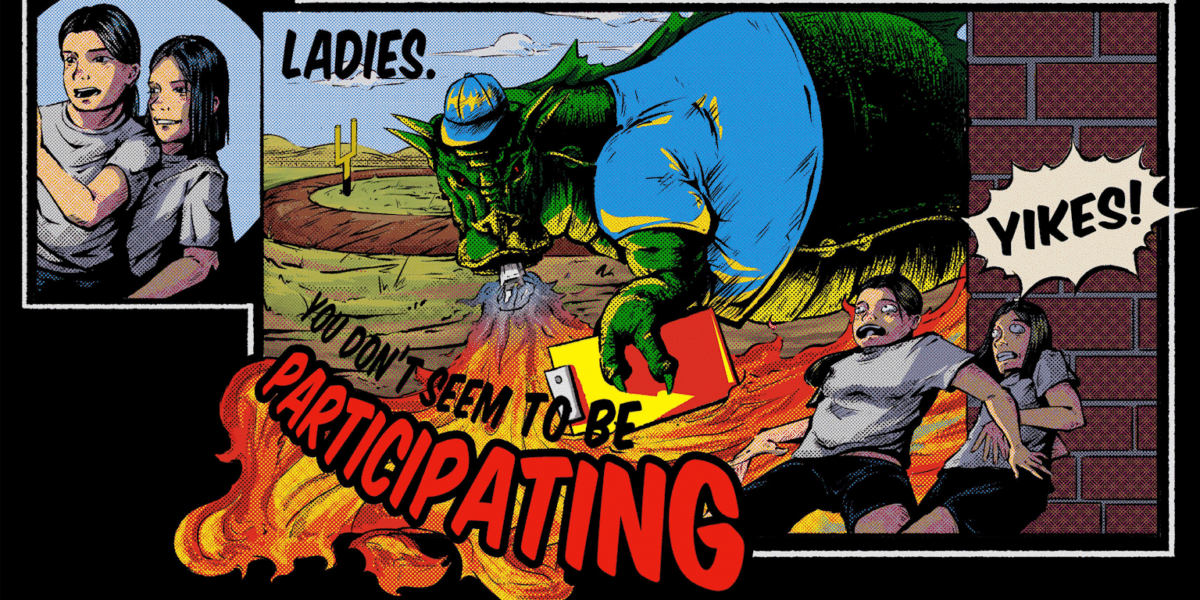
Usually, children have vivid and playful imaginations, but as they grow up their imagination fades away. However, my imagination has remained vibrant and is still an important part of my life. In my investigation, I analyzed how my imagination has played a vital role in shaping who I am. For example, how my imagination has affected my perceptions, actions, and identity; moreover the subsequent consequences of it. I did this by looking through the lens of my curious and playful self, emphasizing humor and exaggeration, and utilizing a comic art style with bold colors. Through my art and storytelling, I want viewers to understand that there is comedy in the chaotic world. I developed my investigation through different artistic practices and experimentation. First, I explored how my imagination impacts how I see people and objects by illustrating them as absurd and fantastical images. I then questioned how my imagination shapes my actions and consequences by recounting how my playfulness led to unfortunate outcomes. Finally, I examined how my imagination influenced my identity by interweaving my culture and sexuality into pieces. In addition, I used stylized comics to capture my vibrant childhood and materials like rice paper to show my Chinese culture.
Physical Education
Chantal Eulenstein
The Dorothea Tanning Writing Portfolio Award
Ames, IA
This portfolio is a testament to my own experiences, fears, thoughts, and multifaceted Brazilian-German-American identity. The works I included in this portfolio all seek to explore and address overarching themes of family, immigration, identity, culture, and loss. Together these works create an intimate portrait of my relationship with my mother, my parents’ separation, and my lack of security in my identity and sense of belonging. Writing is how I process my experiences, and for me, it is a way of thinking about the world. I wrote each of the pieces featured in this portfolio, be it consciously or unconsciously, with a desire to understand myself and the world around me. As a result, I chose these pieces for this portfolio in part because I wanted to showcase how I have reflected on my life and because each piece was an exploration of myself and my family. Both “Omama” and “Mamãe Doesn’t Know How to Cry” seek to understand the dynamics of my parents’ separation. I wrote “Omama” after my paternal grandmother died and my family came together for the very first time. Writing “Omama” showed me that I still loved my father. “Mamãe Doesn’t Know How to Cry” was written because I wanted to understand the separation and its pain in more detail, and because I wanted to depict my mother’s difficult relationship with the U.S. and Brazil.
The topics in each piece were incredibly painful, and I wanted the style in each to encompass that idea. As a result, the writing in both pieces was ingrained in lyricism and a desire to combine prose with an element of poetry. By building a poetic rhythm throughout my pieces, I sought to spill myself onto the page, not only to understand my own emotions, but also to connect with the reader as much as possible. I have often struggled with the complexity of my identity and have sought to understand this part of myself through writing. In “Ode to an Airfryer,” I wanted to depict how it felt to return to Brazil for the first time in six years and for my family to tell me that they did not see me as Brazilian. By switching to writing in second person during the scenes when I was in Brazil, I hoped that the reader would feel how distant I felt from my Brazilian identity. Despite this disconnect with my Brazilian identity, I have found myself drawn to writing about Brazil and my mother’s childhood stories. I am enamored by their complexity and the culture steeped within them. I wrote “The Barbosa Lima Sisters” as a result of this, which is based on my own mother’s stories and her hometown. This portfolio, like all of my writing, has been a form of thinking about my world and understanding myself. I hope that in writing about these topics, I have offered a new window into the themes of family, loss, and identity.
Josue Alvarez Has Blue Eyes and the Most Hispanic Name
People were always surprised when they saw Josue, the large fat white man with a white nose and a white head and the most Hispanic name. Josue didn’t identify as Hispanic, but he had a lot of its character. He had memories of Alma in the kitchen and her hands in some masa— dough, with corn. His first job in high school was working at a taco truck where it was so hot he would start to sweat oil. His first love was a dark-haired Cuban girl called Rosita. He spoke Spanish, but only out of necessity because Alma could not speak a word of English. When he was little he had never been able to say Amá like all the other Mexican kids, and instead stuck an “l” in between the “A” and “m.” Alma thought it was sweet, the way her son was calling her the Spanish word for soul, and so she never corrected him.
Josue avoided saying his name. Sometimes he told people his name was Bob because it was the only white name he could think of, and they looked at him strange, a little funny, a smile somewhere on the corner of their mouths. But it was less strange than when he said Josue, because there was so much confusion, especially when he said it well with the emphasis on the “u” and the accent.
Click here to read more!
To see more Gold Medal Portfolio recipients, past and present, visit our Eyes on the Prize series.